
How to Play Roulette: Everything You Need to Know Before Your First Spin
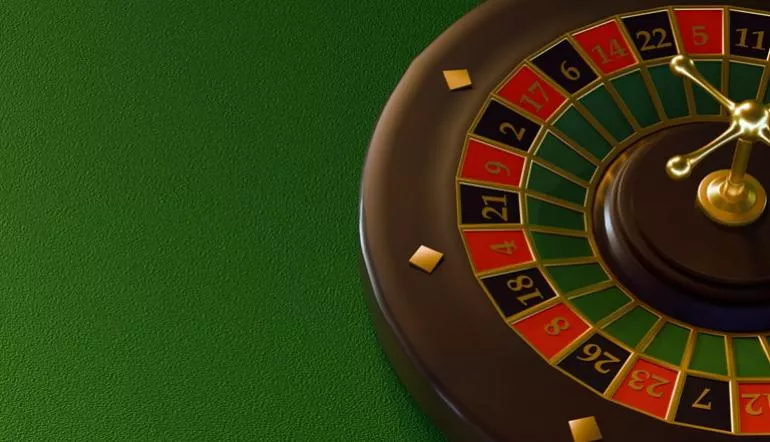 Visual creado con IA
 This guide covers everything a new roulette player needs to know: how the game works, every bet type with its exact payout and winning probability, how the house edgeis calculated across all three wheel variants, and the special rules that reduce that edge in your favour.
How Roulette Works
Roulette is a casino gamein which players bet on where a ball will land on a spinning wheel. The wheel contains numbered pockets, red and black from 1 to 36, plus one or two green zero pockets. Every spin is random and independent of all previous results.
A round of roulette follows a fixed sequence:
- Players place chips on the table layout to cover a number, a group of numbers, a colour, or a range.
- The dealer spins the wheel in one direction and launches the ball in the opposite direction along the outer track.
- Betting remains open until the dealer calls “no more bets” as the ball begins to drop.
- The ball settles into a numbered pocket. The dealer marks the winning number with a dolly marker, removes all losing bets, and pays out all winning bets. The dolly is removed and the next round begins.
In online roulette, the betting window opens and closes automatically. On some non-live games, you also control when the spin begins.
Roulette Wheel Types
Two types of roulette wheel are in common use. The one you play on is the single most important variable affecting your odds.
- European wheel: 37 pockets – numbers 1 to 36 plus a single zero (0). House edge: 2.70%.
- American wheel: 38 pockets – numbers 1 to 36 plus a single zero (0) and a double zero (00). House edge: 5.26%.
The only structural difference between the two wheels is the extra double-zero pocket. Because the payout on every bet is the same on both wheels, that one extra pocket doubles the casino’s mathematical advantage. The rule is simple: always play the European wheel when both options are available.
On both wheel types, numbers are arranged non-sequentially. This design ensures that high, low, odd, and even numbers are distributed evenly around the wheel, and was originally intended to prevent players from exploiting visible physical biases.
Roulette Bets, Payouts and Odds
All roulette bets fall into one of two categories. Inside bets cover specific numbers or small groups – they pay more but win less often. Outside bets cover large sections of the layout – they win more often but pay less.
For the full probability breakdown across all bet types, see our roulette oddsguide.
Inside Bets
Straight Up (En Plein) – pays 35 to 1
A bet on a single number. Place your chip directly on any number from 1 to 36, or on 0 (and 00 on the American wheel). Win probability: 2.70% on a European wheel, 2.63% on an American wheel.
Split (À Cheval) – pays 17 to 1
A bet on two adjacent numbers. Place your chip on the shared border between them. Win probability: 5.41% European / 5.26% American.
Street (Transversal) – pays 11 to 1
A bet on three numbers in a horizontal row. Place your chip on the outer border of the row. A chip on the border of 7 covers 7, 8, and 9. There are 12 possible street bets. Win probability: 8.11% European / 7.89% American.
On the European table, two special trio combinations called basket bets also pay 11 to 1: (0-1-2) and (0-2-3).
Corner (Carré) – pays 8 to 1
A bet on four numbers that form a square on the layout. Place your chip at the point where all four numbers meet. There are 12 possible corner bets, plus one basket bet covering (0-1-2-3) at the same odds. Win probability: 10.81% European / 10.53% American.
Six Line / Double Street (Sixain) – pays 5 to 1
A bet on six numbers across two adjacent rows. Place your chip on the outer border between the two rows. There are 11 possible six-line bets. Win probability: 16.22% European / 15.79% American.
Five Number Bet (“The Beast”) – pays 6 to 1 (American wheel only)
A bet covering 0, 00, 1, 2, and 3. This is the worst bet in roulette. Its house edge is 7.89% – nearly 3 percentage points higher than every other bet on the American wheel. Do not place this bet.
Outside Bets
Outside bets are placed in the clearly labelled sections around the edge of the layout. Every outside bet loses if 0 or 00 is the result, except on tables that offer La Partage or En Prison (see below).
Red / Black (Rouge et Noir) – pays 1 to 1
Bet on whether the winning number is red or black. Win probability: 48.65% European / 47.37% American.
Odd / Even (Impair et Pair) – pays 1 to 1
Bet on whether the winning number is odd or even. Win probability: 48.65% European / 47.37% American.
High / Low (Passe et Manque) – pays 1 to 1
Bet on the low range (1-18) or the high range (19-36). Win probability: 48.65% European / 47.37% American.
Dozens (Douzaine) – pays 2 to 1
Bet on one of three consecutive groups: 1-12, 13-24, or 25-36. You may cover more than a dozen simultaneously. Win probability: 32.43% European / 31.58% American.
Columns (Colonne) – pays 2 to 1
Bet on one of the three vertical columns of 12 numbers on the layout. Place your chip at the base of the column. Win probability: 32.43% European / 31.58% American.
All Roulette Bets at a Glance
- Red / Black, Odd / Even, High / Low – payout 1:1 – European: 48.65% / American: 47.37%
- Dozens, Columns – payout 2:1 – European: 32.43% / American: 31.58%
- Six Line – payout 5:1 – European: 16.22% / American: 15.79%
- Five Number (American only) – payout 6:1 – 13.16%
- Corner – payout 8:1 – European: 10.81% / American: 10.53%
- Street – payout 11:1 – European: 8.11% / American: 7.89%
- Split – payout 17:1 – European: 5.41% / American: 5.26%
- Straight Up – payout 35:1 – European: 2.70% / American: 2.63%
The House Edge in Roulette
The house edge is the built-in mathematical advantage the casinoholds on every bet. It exists because roulette payouts are calculated as if there were one fewer pocket on the wheel than there actually is.
On a European wheel with 37 pockets, a fair payout for a straight-up bet would be 36 to 1. On an American wheel with 38 pockets, it would be 37 to 1. Both wheels pay only 35 to 1. The difference between the true odds and the actual payout is the house edge.
Expected loss per 100 units wagered:
- Five Number Bet / American wheel: 7.89 units
- All other bets / American wheel: 5.26 units
- All bets / European wheel: 2.70 units
- Even-money bets with Surrender / American wheel: 2.63 units
- Even-money bets with En Prison or La Partage / European wheel: 1.35 units
No betting system changes these figures. The house edge applies to every spin, regardless of what has happened in previous rounds.
French Roulette Rules: La Partage and En Prison
French Roulette uses a single-zero European wheel with two additional rules that apply exclusively to even-money outside bets when the ball lands on zero. Both rules reduce the house edge from 2.70% to 1.35%, the lowest available in roulette.
La Partage:If zero is the result, the dealer returns half your even-money stake. You lose the other half. The bet is resolved immediately. This is the more commonly available of the two rules.
En Prison:If zero is the result, your even-money bet is held for the next spin rather than being lost. If the following spin produces a result that matches your original selection, your full original stake is returned, not paid as a win. If the next spin is a loss or another zero, your stake is forfeited.
Both rules apply only to Red/Black, Odd/Even, and High/Low bets. If your roulette strategyis built around even-money outside bets, a French table with La Partage or En Prison is the correct choice. It is the single most effective table selection you can make.
How to Read the Roulette Scoreboard
Every roulette table, live and online, displays a scoreboard showing recent results, typically the last 16 to 20 numbers. Some venues extend this to show results across all active tables.
The scoreboard is useful for two things: verifying a result you didn’t see, and tracking patterns if you use a trend-based strategy. It isn’t a predictive tool. Each spin is statistically independent. A number that has not appeared for 30 spins has exactly the same probability of appearing on spin 31 as any other number. Past results do not influence future outcomes.
How to Buy In at a Roulette Table
Roulette uses dedicated coloured chips that are specific to each table. They cannot be used at other games or cashed at the cage. The buy-in process is as follows:
- Wait for the current round to end. Place your cash on the table layout – never hand it directly to the dealer.
- Request “colours” and state the value you want each chip to represent if it differs from the table minimum.
- The dealer records your chip value and issues your stack.
- When you leave, exchange your coloured chips for standard casino chips at the table before going to the cashier.
When to Start and Stop Betting
Betting opens as soon as the dealer removes the dolly marker from the previous winning number. Chips may be placed while the wheel is already spinning. The dealer will say “finish betting” as a warning, then “no more bets”, after which no additional chips may be placed or moved.
Placing a bet after “no more bets” has been called is a violation of table rules. The dealer will remove the late bet. At busy tables, this happens regularly, causing delays. In online roulette, the betting window closes automatically, and no late bets are possible.
Where to Play Live Roulette Online
888casino offers live roulette tables with real dealers, available around the clock. The live roulette lobby includes European single-zero tables and French tables with La Partage, the variant with the lowest house edge in the game.
Play live rouletteat 888casino and apply everything covered in this guide from your first spin.
FAQ – How to Play Roulette
Is roulette a game of skill or luck?
Roulette is a game of luck. The outcome of every spin is determined by physics and is unpredictable. No skill, strategy, or system can influence where the ball lands.
What is the best bet in roulette?
The best bet in roulette is any even-money outside bet (Red/Black, Odd/Even, High/Low) on a French table with La Partage or En Prison. This combination gives the player the lowest available house edge: 1.35%.
What is the difference between European and French roulette?
Both use a single-zero wheel with 37 pockets. French Roulette adds two rules (La Partage and En Prison) that return part or all of an even-money stake when the ball lands on zero. This halves the house edge on those bets from 2.70% to 1.35%.
Can you beat roulette in the long run?
No. The house edge applies to every spin. Over a large enough number of bets, every player will lose an amount proportional to the total wagered and the house edge of the table. Betting systems can manage bankroll variance but cannot eliminate the house edge.
Key Takeaways
- Roulette outcomes are random. Every spin is independent, and no previous result affects the next one.
- The European single-zero wheel has a house edge of 2.70%. The American double-zero wheel has a house edge of 5.26%. Choose European.
- French Roulette with La Partage or En Prison reduces the house edge on even-money bets to 1.35%, the lowest in roulette.
- Inside bets (Straight Up, Split, Street, Corner, Six Line) pay more and win less often. Outside bets (Red/Black, Odd/Even, High/Low, Dozens, Columns) win more often and pay less.
- A straight-up bet pays 35 to 1 on both wheel types. The true odds are 36 to 1 on the European wheel and 37 to 1 on the American wheel. That gap is the house edge.
- No betting system overcomes the house edge. Table selection and bankroll management are the only decisions within a player’s control.
 Visual creado con IAA casino games enthusiast, Frederico brings engaging topics about casinos to our blog. You’ll find regular articles on strategy, tips, news, and fun curiosities here at 888casino.